AI Will Not Save You If We All Leave
When you squeeze out the same communities who are both workers and customers, you shrink the market AI is meant to serve. You are not building a sleek automated future. You are building a very expensive machine for a smaller, poorer, more unequal society.
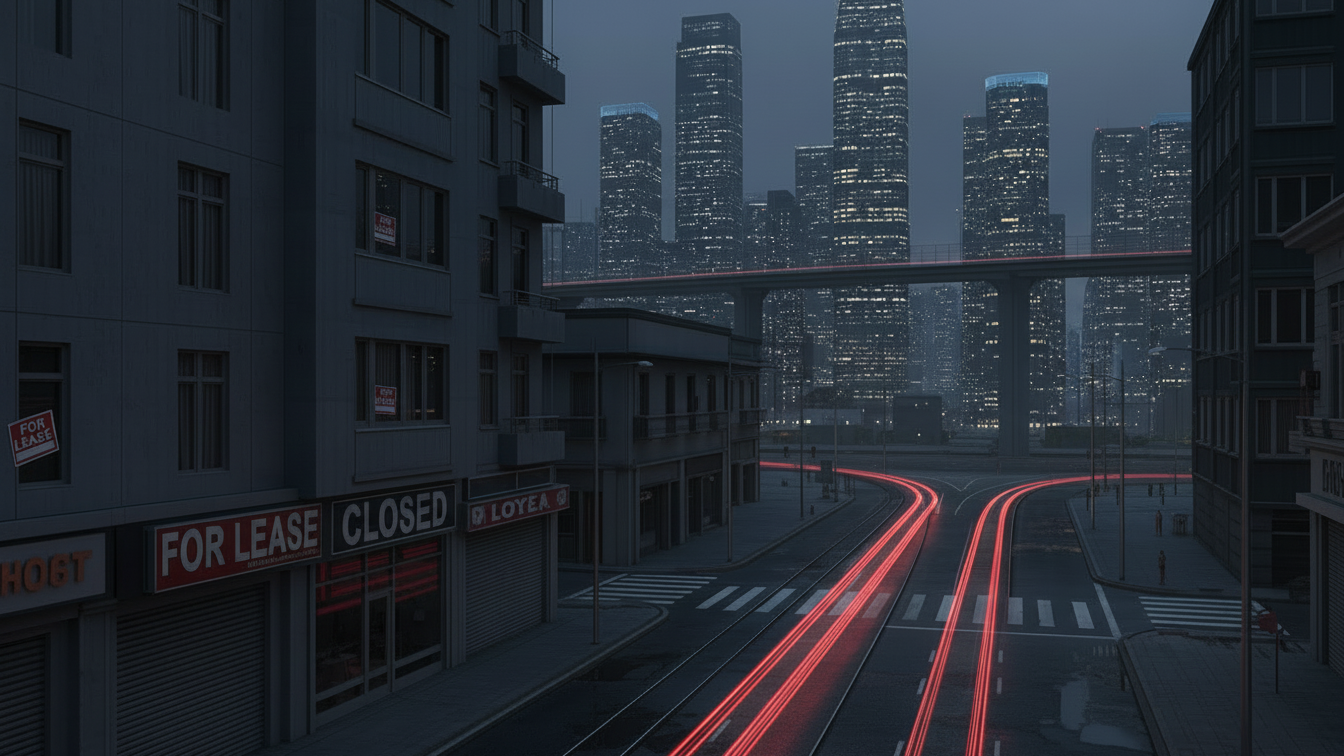
There is a convenient fantasy at the top of our economy right now.
It goes like this: if immigrants, Black and brown workers, queer and trans people, disabled and neurodivergent people do not like how things are going, they can leave. If “Others” will not stay quiet and grateful, they can be replaced. By whom? By AI and robots.
You can hear it under a lot of the current backlash. We do not need you. We have the cloud now.
Let us test that. Not with vibes, but with science, math, and money.
Start with the power bill.
Data centers already consume roughly one and a half percent of global electricity. The International Energy Agency projects that by 2030, electricity use by data centers could more than double to around 1,000 terawatt hours, with AI as a major driver. That is roughly the current electricity use of a large industrial country. In the United States, federal energy forecasts warn that record high electricity demand in the next few years will be driven in part by new AI heavy data centers.
Training a single large language model is not cheap either. One peer reviewed estimate of a GPT-3 scale model put the electricity used for a single major training run at more than 1,200 megawatt hours, with associated emissions on the order of 500 metric tons of carbon dioxide. That is before constant fine tuning, updating, and the billions of queries that follow.
Then there is water. AI intensive data centers rely on enormous volumes of water for cooling. Recent analyses estimate that AI data centers already use billions of gallons of water per year and that each AI query carries a small “hidden” water cost that adds up quickly at scale.
Every “quick” AI answer drinks from someone’s river or reservoir. The cloud is not in the sky. It is in your grid and your watershed.
Now look at the hardware. The chips that power state of the art AI models are produced in a handful of places. The most advanced AI chips, at three and five nanometers, are overwhelmingly made by one company, TSMC in Taiwan, which controls the vast majority of global capacity at those cutting edge nodes. High performance computing for AI now makes up a large share of TSMC’s business.
Every AI server you see in a glossy keynote sits on top of a fragile chain. Miners who extract cobalt, lithium, copper, and rare earths in the Democratic Republic of Congo, Chile, Indonesia, and beyond. Refinery workers who process those materials. Ship crews and port workers who move them. Truck drivers who deliver them to fabrication plants. Clean room technicians who stand for long shifts in fabs in Taiwan, Arizona, and elsewhere. Warehouse and construction workers who build and maintain the data centers. Grid operators and linemen who keep the power flowing.
None of these people appear in “AI will replace you” speeches. Many of them are immigrants, people of color, or from countries our politics treats as peripheral. Remove them, and the robot revolution stops at the loading dock.
Even if the hardware stays intact, AI does not run without constant human labor on the inside.
The models that seem so fluent are trained and cleaned up using vast amounts of human labeled data. The global data labeling and annotation market is already worth tens of billions of dollars and is projected to grow sharply this decade. Much of that work is done by low wage workers in the Global South who label images, transcribe audio, categorize text, and perform reinforcement learning with human feedback to make the systems less toxic and more useful.
Content moderation is also human. The reason many AI systems do not spit out the worst of the internet at you is that people have already looked at it and said “do not show this.” Often they did that work for low pay, with minimal mental health support.
On top of that, AI infrastructure requires software engineers, data engineers, site reliability engineers, network administrators, and electricians. The servers do not rack themselves. The fiber does not pull itself. The outages do not fix themselves at two in the morning. Under every AI demo there is an on call rotation full of people whose names never appear on the slide deck.
There is a deeper dependency that AI boosters rarely acknowledge. Data and demand.
These systems are trained on human language, images, laws, code, and behavior. They learn from our arguments, our research papers, our art, our support tickets, our emails, our books. They need new data and feedback to stay aligned with reality. Without that, they drift. They get stale, biased, and wrong in ways that matter.
If the groups currently labeled “Other” pull back from public life, the data they generate goes with them. Fewer languages. Fewer perspectives. Fewer cultural references. Less information about what is happening in neighborhoods that were already undercounted. The models trained in that thinner world may still produce confident answers, but those answers will center an even narrower slice of humanity.
Then there is demand. AI systems are not built for their own amusement. They exist to sell something: search ads, cloud credits, subscriptions, consulting services, automation tools. All of that depends on people who can afford to live, work, buy, and build.
When you squeeze out the same communities who are both workers and customers, you shrink the market AI is meant to serve. You are not building a sleek automated future. You are building a very expensive machine for a smaller, poorer, more unequal society.
So no. AI will not save you if we all leave.
If immigrants, Black and brown workers, queer and trans people, disabled and neurodivergent people walk away or are pushed out, you will not be left with a smooth, self running utopia. You will be left with thirsty data centers in regions that are already short on water. You will be left with supply chains for chips and minerals that cannot function because the people who worked the mines, factories, ports, fabs, and grids are gone. You will be left with models that cannot learn from the people you drove out and cannot sell into the neighborhoods you hollowed out.
The servers might hum for a while. The graphs in the slide decks might still point up for a quarter or two. Then the outages get longer. The updates get slower. The systems start to feel less relevant. You can automate a lot of tasks. You cannot automate a society.
AI is not a way to live without us. It sits on top of us.
If you want a thriving future, you have to keep and value the people who power it.